


Summary
Selling your business is far more than just a financial transaction. It is an emotional and psychological transition that many business owners are unprepared to navigate when the moment arrives. This article explores the personal challenges of letting go of a company that has become a core part of your identity, and offers perspective on how to approach the process with clarity, confidence, and a plan for what comes next. Understanding the emotional dimensions of an exit is as essential as managing the financial and legal ones.
Key Highlights
- Recognize how deep emotional attachment to your business can derail an otherwise well-structured sale deal
- Understand why separating personal identity from business ownership is critical beforeinitiatingany exit process
- Prepare psychologically for life after your business by defining new sources of purpose and personal priorities
- Discover how proactive exit planning gives you more control over timing, transaction structure, and financial outcomes
- Approach the ownership transition with confidence by addressing the emotional side of selling alongside the financial

Many small business owners love what they are doing.
It’s the fuel that powers them through long days and adversity. It’s why three out of 10 in Canada opened up shop.
But it’s also the kicker that can make it so hard to leave a milestone that some seven out of 10 of us will be approaching this decade.
When our personal and professional identities are fused together in our business, it can be hard to know what we want out of life once we leave. That’s what I’ve seen firsthand with some business sellers and what I want to highlight in this post.
Preparation and mindset
Every business owner I know wants to preserve their wealth and minimize their taxes when they go to sell their business. Exit planning helps formalize the how and when. And the sooner you put together your plan, the more control and options you’ll have. I’ll have more to say on that topic another time.
We also need to prepare for the emotional aspects of selling the business that’s been our “baby.” Failing to do so can derail the deal. I’ve seen it happen.
“Very often, when owners say that they ‘love what they are doing’, what they really are saying is that I am emotionally attached to my company since it is my ‘baby,'” says Jack Beauregard, in why you love your business. “I conceived the company, nurtured it and have spent decades of my life growing the business.”
“Also, many owners have a strong attachment to living their lives around ‘checking things off’ their to-do lists,” adds Beauregard, CEO, Successful Planning Transition Institute (STPI). “They are psychologically attached to what they are doing, since they derive their sense of importance from always being busy and feeling that people, or the business, cannot survive if they leave. They are attached to welding power and being ‘in the know.'”
Adjusting to life without your baby
Keeping busy can also be a form of avoidance. In The Right Way To Say Goodbye To Your Business, executive and management coach Steven Berglas explains that for some of us the great danger in saying goodbye is free time and facing things we may not want to face. But he counters with five ways to a happy goodbye, and a positive message.
“Regardless of whether or not you have a next act in mind you must trust that the spirit in you that drove you to go solo years ago will be revitalized once you are again free to feel it.”
The freeing aspect of letting go is expressed eloquently in Paulo Coelho’s post, Closing Cycles, on life stages that have come to an end.
Have you cut the cord from your business and found new enjoyment and purpose? What advice would you give to help someone else who is finding it hard to make that break?
And if you’re looking for the ins and outs of selling a business, get a free download of my book “Insider Tips On Selling a Business in Canada.”
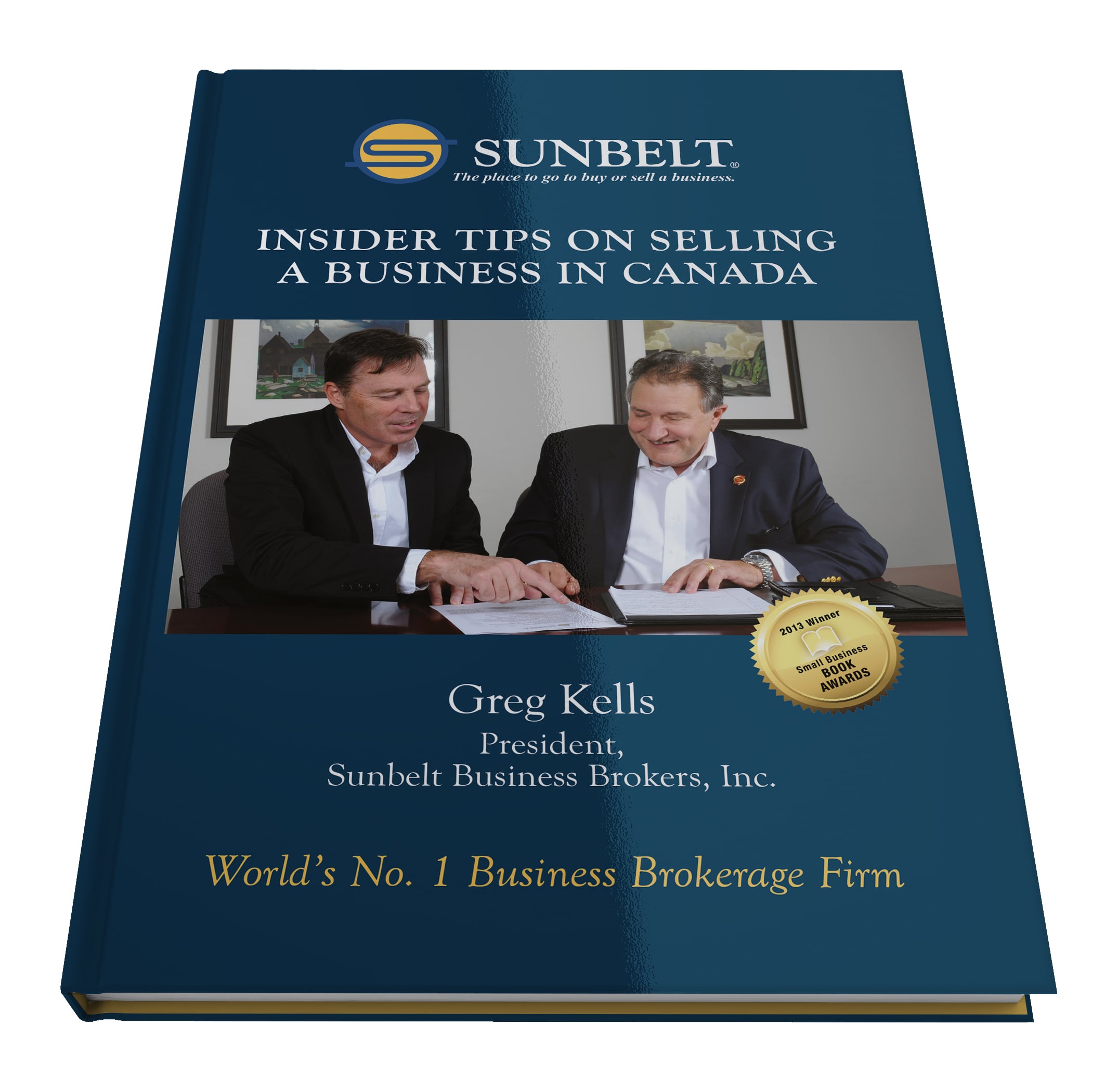
Insider Tips on Selling a Business in Canada
Selling a business is complicated. You need a professional who can walk you through the minefield of details.
Sunbelt Canada president Greg Kells has seen small business from every angle—as entrepreneur, partner, consultant, business broker and valuator—and helped hundreds achieve their dreams.
His Insider Tips on Selling a Business in Canada reveals the secrets of selling your business and getting what it is worth in the Canadian marketplace.
FAQs
Why do business owners struggle emotionally when selling their business?
Many business owners have invested years, sometimes decades, building their company, making it deeply tied to their sense of identity, purpose, and daily structure. Letting go can feel like losing a core part of themselves. Fear of free time, uncertainty about what comes next, and the psychological need to feel indispensable all contribute to the emotional difficulty owners experience during the selling process.
How can you prepare emotionally for selling your business?
Emotional preparation begins well before the transaction closes. Owners benefit from clearly defining what they want their life to look like post-sale, identifying new sources of purpose and meaningful connection, and seeking guidance from advisors or peers who have navigated similar transitions. Addressing the emotional side of exiting proactively reduces the significant risk of last-minute hesitation derailing an otherwise viable deal.
Can emotional attachment affect the outcome of a business sale?
Yes, unresolved emotional attachment is one of the most common reasons business sales stall or collapse entirely, even when all financial and legal terms are favorable. Owners who have not mentally prepared to let go may unconsciously sabotage negotiations, delay key decisions, or reverse course at closing. Working with an experienced business broker helps keep the process objective and forward-moving throughout.
What should a business owner do to prepare for life after selling?
Planning for life after the sale is just as important as the financial exit plan itself. Owners should explore new interests, reconnect with relationships that were sidelined during their business years, and consider how to redirect their time, energy, and expertise. The entrepreneurial spirit that built the business rarely disappears but it often transforms into mentorship, strategic investment, advisory roles, or an entirely new venture.


 The Process of Selling a Business